Vest Harness vs Collar: Which Is Better for Your Dog?
The Case for a Collar
A flat collar is the standard place to carry your dog's ID tag, and it is fine for dogs that walk calmly on a loose leash. Collars are lightweight, easy to put on, and comfortable for everyday wear. The drawback is that all the pressure from pulling goes to the neck, which can strain the throat and trachea, especially in small or flat-faced breeds.
The Case for a Harness
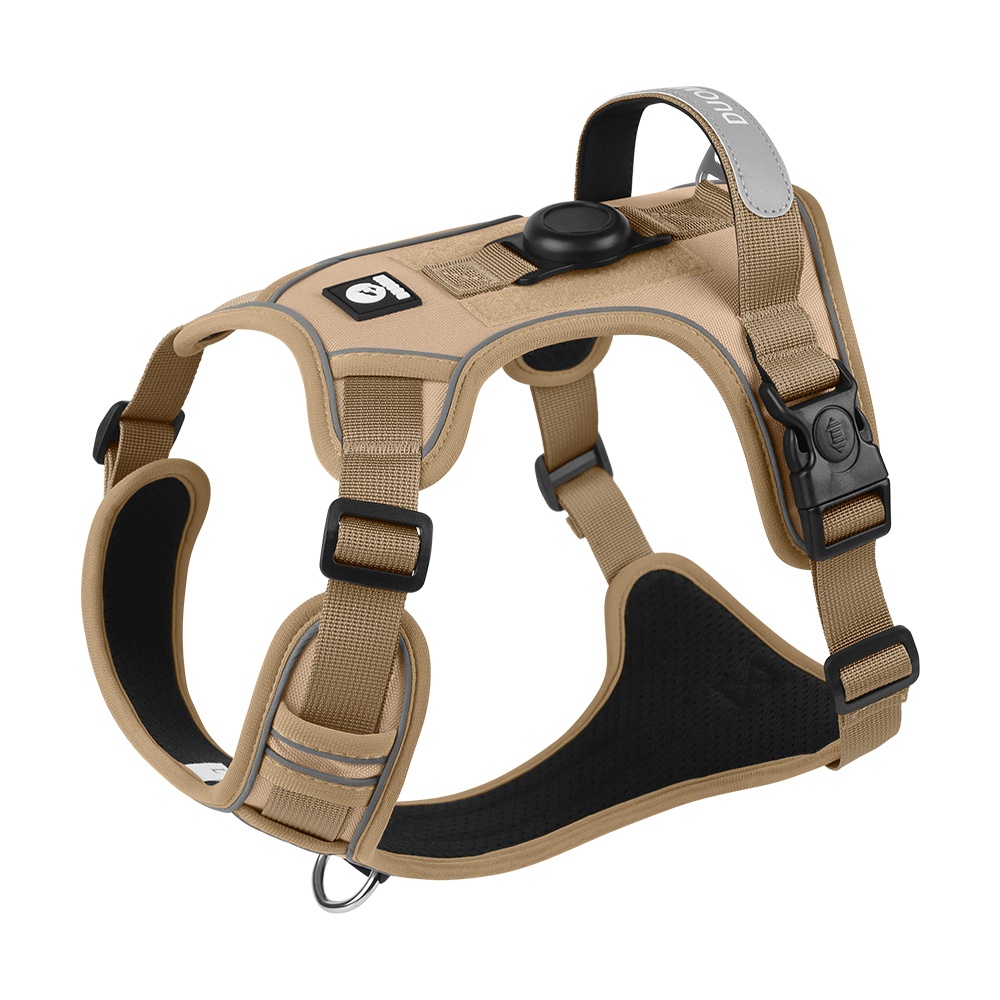
A harness spreads pressure across the chest and shoulders instead of the neck. That makes it a good choice for puppies, small dogs, flat-faced breeds, and dogs that pull. Vest-style harnesses are padded, breathable, and wrap around the body, which many dogs find more comfortable than straps.
- Less neck strain: better for dogs with breathing or throat issues.
- More control: useful for strong or excitable dogs.
- Safer for escape artists: harder to slip out of when fitted correctly.

Choosing the Right Fit
Measure your dog's chest at the widest point and check the size chart before buying. The harness should sit snugly without rubbing behind the front legs, and you should be able to slide two fingers under the straps. Check the fit regularly as puppies grow or dogs change weight.
The Best of Both
Many owners use both: a collar for ID tags and a harness for walking. Whichever you choose, pair it with a standard leash and good training. No equipment replaces teaching your dog to walk politely beside you.
Common Harness and Collar Mistakes
- Wearing a collar too loose or too tight: two fingers should fit comfortably beneath it.
- Leaving a harness on constantly: remove it at home to prevent rubbing and matted fur.
- Using a collar for a hard-pulling dog: this can strain the neck and throat.
- Forgetting to adjust as puppies grow: check the fit every couple of weeks.
Frequently Asked Questions
Does a harness make a dog pull more?
Not necessarily. Some back-clip harnesses can encourage pulling in strong dogs, while front-clip designs discourage it. Training still matters most.
Can my dog sleep in a harness?
It is better to remove it. Harnesses can rub, snag, or become uncomfortable overnight.
What size harness does my dog need?
Measure the chest at its widest point and compare it to the size chart. When in doubt, size to the chest, not the weight.
Quick Takeaways
Use a collar for ID and a harness for comfortable walking, especially for small, flat-faced, or strong dogs. Fit matters more than style.
Compare styles in our collars, leashes, and harnesses collection.
Related Articles