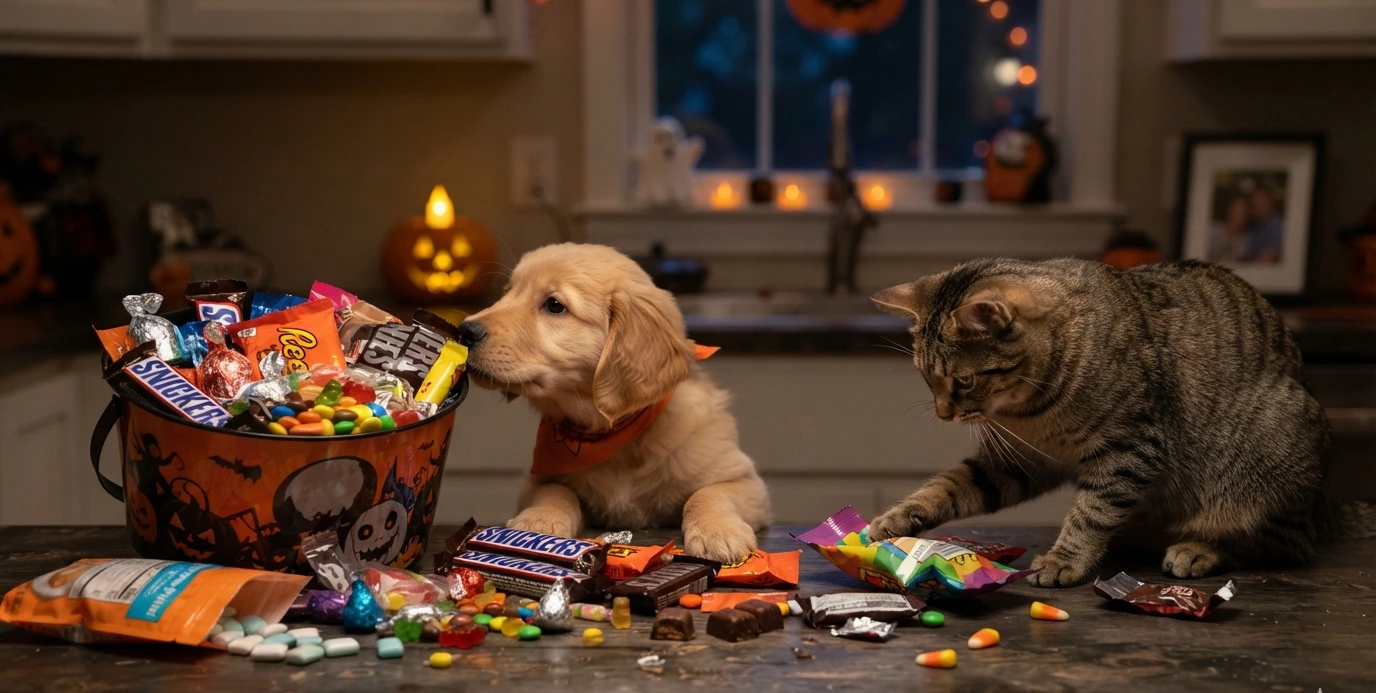
Halloween Candy Dangers for Pets: Chocolate, Xylitol, and What to Watch For
Every Halloween, vet clinics see the same pattern: a dog gets into the candy bowl while the family is out trick-or-treating or answering the door, and nobody notices until symptoms show up hours later. Knowing exactly what's dangerous — and what isn't — makes it much easier to act fast if it happens to you.
Chocolate: The One Everyone Knows, But Details Matter
Chocolate contains theobromine and caffeine, both of which dogs and cats metabolize far more slowly than humans do. The danger depends heavily on the type:
Baking chocolate and dark chocolate — the most dangerous, even in small amounts
Milk chocolate — still toxic, but requires a larger amount to cause serious harm
White chocolate — minimal theobromine content, lowest risk of the three, though still not safe to feed intentionally
Symptoms typically appear within a few hours: vomiting, diarrhea, restlessness, rapid breathing, and in serious cases tremors or seizures. Smaller dogs and cats are at higher risk from the same amount of chocolate that a large dog might shrug off.
Xylitol: More Dangerous Than Chocolate, Less Well Known
Xylitol is a sugar substitute in many sugar-free candies, gums, and mints — and it's genuinely one of the most dangerous common household substances for dogs. It triggers a rapid insulin release that can cause blood sugar to crash within 30 minutes to an hour, sometimes before any obvious symptoms appear.
Watch for: weakness, wobbliness, vomiting, or collapse. This one moves fast — if you know or suspect your dog ate anything containing xylitol, this is not a "wait and see" situation.
Raisins and Grapes
Sometimes handed out as a "healthier" Halloween treat, raisins are toxic to dogs and can cause acute kidney failure. Unlike chocolate, there's no clearly established "safe small amount" — even a few raisins have caused serious reactions in some dogs.
Wrappers and Packaging
Not a toxin, but a very common Halloween ER visit anyway: pets that swallow foil wrappers, cellophane, or lollipop sticks whole can develop intestinal blockages. This is more common than people expect, especially with candy grabbed straight out of a bowl.
What to Actually Do If Your Pet Gets Into Candy
Figure out what and roughly how much — check wrappers if you can, this matters for treatment
Don't wait for symptoms — especially with xylitol, by the time symptoms appear you've lost valuable time
Call your vet or an animal poison control line immediately — have the ingredient list ready if possible
Don't induce vomiting unless a vet specifically tells you to — it's not safe in every situation
Prevention Is Genuinely Easier Than Treatment
The candy bowl should be somewhere your pet cannot physically reach — not just "on the counter," since counter-surfing dogs and jumping cats are both common. If you're handing out candy at the door, keep it in your hand or a container away from the entryway rather than sitting in a bowl your pet has access to while you're distracted.
Looking for pet-safe treats to keep on hand instead? Check out our feeding and hydration collection for safer options your dog or cat can actually enjoy this season.