Halloween Pet Safety Guide: What Every Dog and Cat Owner Should Know
Halloween is one of the most dangerous holidays of the year for pets — and most owners don't realize it until something goes wrong. Between candy bowls at nose height, strangers in costumes at the door all night, and decorations that look a lot like toys, the risks add up fast. Here's what actually matters, and how to prevent the most common Halloween pet emergencies before they happen.
Why Halloween Is Riskier Than It Looks
Vet clinics see a real spike in emergency visits every October 31st. It's not just chocolate — it's the combination of a chaotic, high-stimulation night with dozens of small hazards packed into a few hours. A calm, well-prepared household can avoid nearly all of it.
The Candy Problem (It's Worse Than You Think)
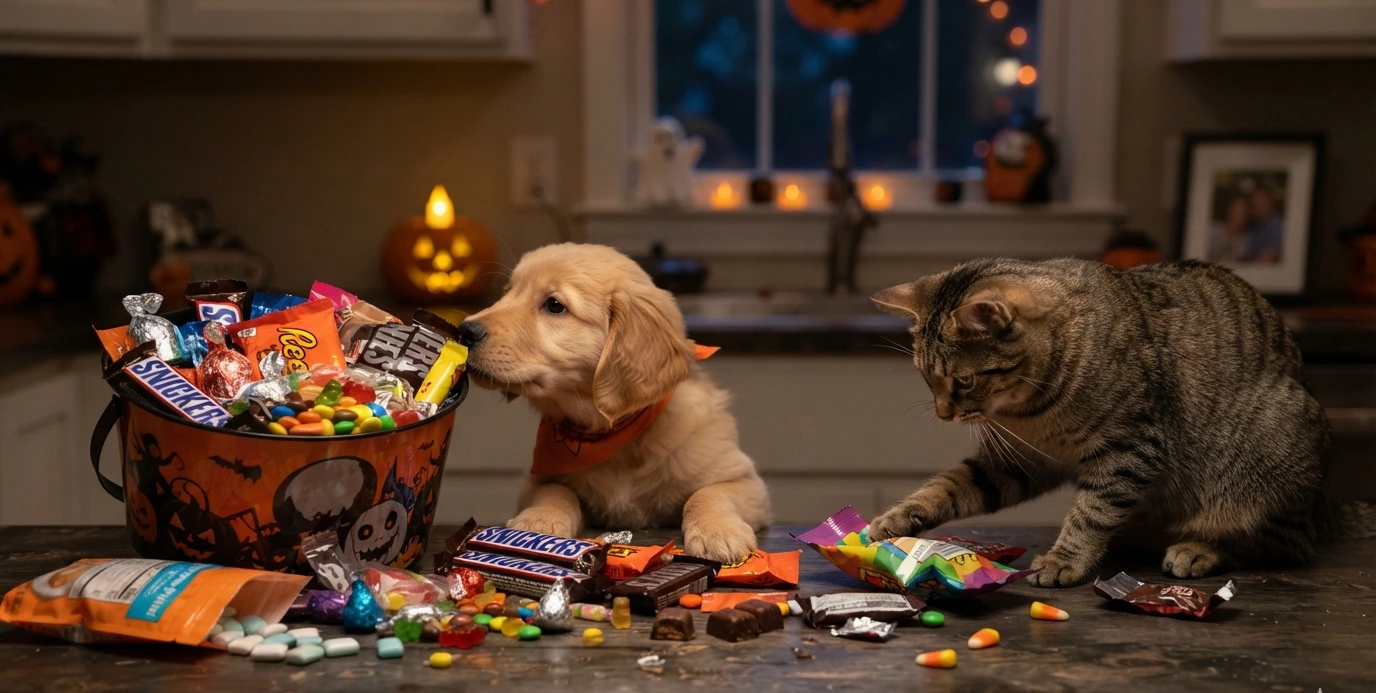
Chocolate is the hazard everyone knows about, but it's not the only one:
Chocolate — toxic to both dogs and cats, with dark and baking chocolate the most dangerous. Even small amounts can cause vomiting, rapid heart rate, or seizures in smaller pets.
Xylitol — found in sugar-free candy and gum, this is even more dangerous than chocolate for dogs. It can cause a rapid, severe drop in blood sugar within 30 minutes.
Candy wrappers — pets that swallow foil or cellophane wrappers whole can develop intestinal blockages that require surgery.
Raisins — sometimes handed out as a "healthier" treat, but toxic to dogs in even small quantities.
What to do: Keep the candy bowl somewhere pets genuinely cannot reach — not just "up high," since determined dogs and agile cats both climb. If your pet does get into candy, don't wait to see what happens; call your vet or an animal poison control line immediately.
The Door-Answering Problem
A steady stream of strangers in strange outfits, ringing the bell every few minutes for hours, is genuinely stressful for most pets — even normally social ones. This is where most Halloween pet escapes happen, not from deliberate wandering but from a startled dash through an open door.
A few reliable options: - Keep dogs and cats in a separate room, away from the front door, for the evening - Make sure your pet has a properly fitted collar with ID and is leashed or contained before you start answering the door, not after the first knock - If your pet is anxious around strangers, this is a night to lean into containment rather than "letting them get used to it"
Costumes: Fine, With Caveats
Pet costumes are genuinely fun and can be totally safe — the mistakes are usually about fit and duration, not the idea itself.
Make sure nothing restricts breathing, vision, hearing, or the ability to open the mouth normally
Avoid small dangling or chewable parts (buttons, bells) that could be swallowed
Do a short test-run before the actual night — a costume your pet tolerates for 5 minutes in your living room is very different from one they'll tolerate for hours
Watch for signs of stress (panting, freezing, trying to remove it) and stop if you see them
Decorations Worth a Second Look
Glow sticks, fake cobwebs, candles, and small figurines are common Halloween decor — and common causes of Halloween vet visits. Glow stick liquid isn't highly toxic but tastes bad enough to cause a lot of drooling and distress if bitten into. Fake cobwebs can be swallowed and cause blockages. Open flames near a curious cat are a fire risk most people don't think about until it's a problem.
A Simple Halloween Checklist
[ ] Candy stored somewhere genuinely inaccessible, not just "high"
[ ] Pet secured in a separate room or on a leash before trick-or-treaters start arriving
[ ] ID tag and collar double-checked and properly fitted
[ ] Costume (if used) test-worn beforehand for comfort and safety
[ ] Decorations checked for swallowable small parts and open flames
[ ] Emergency vet or poison control number saved in your phone, just in case
Keep Your Pet Comfortable and Secure
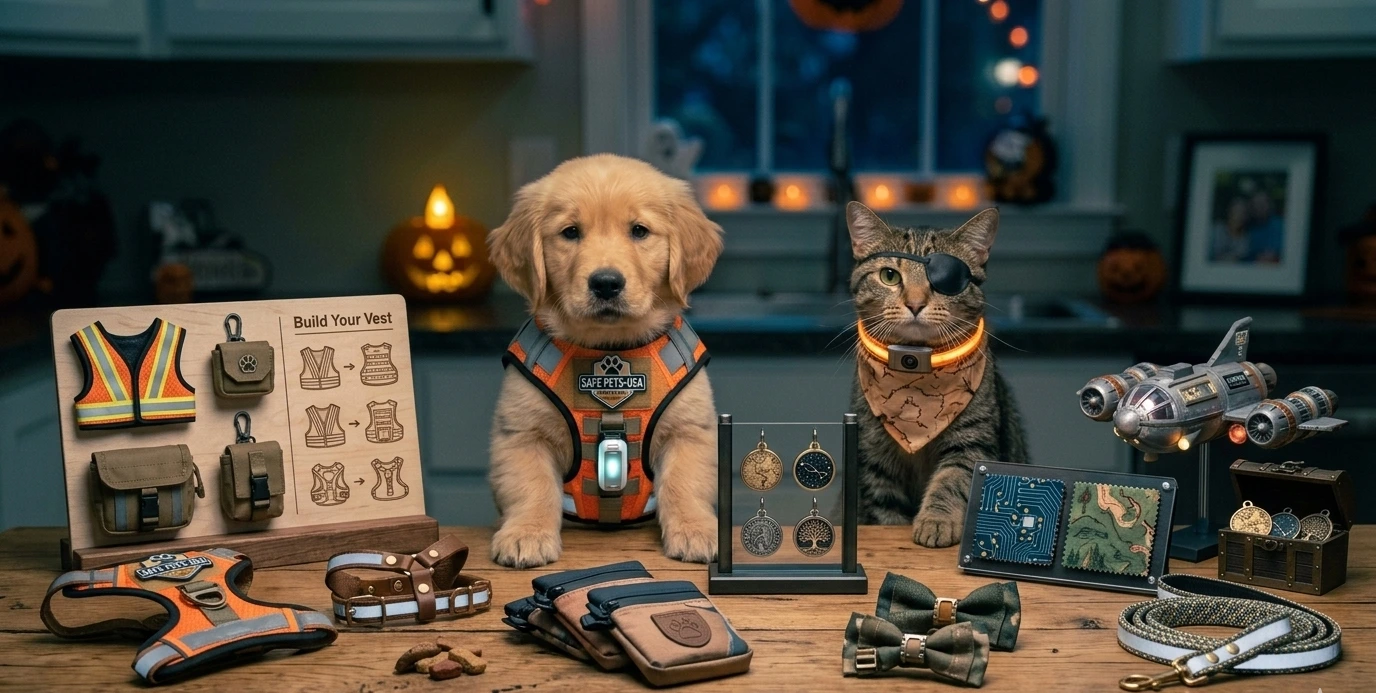
A properly fitted collar and harness make a real difference on a night like Halloween, when the front door opens dozens of times. If it's been a while since you've checked the fit, browse our collars, leashes, and harnesses for a secure, comfortable option before the trick-or-treaters arrive.
If your pet tends to get anxious around noise and strangers, a calming or enrichment product can help take the edge off a chaotic evening.
Have a Halloween pet safety story or tip of your own? We'd love to hear it — reach out through our contact page.
Related Articles