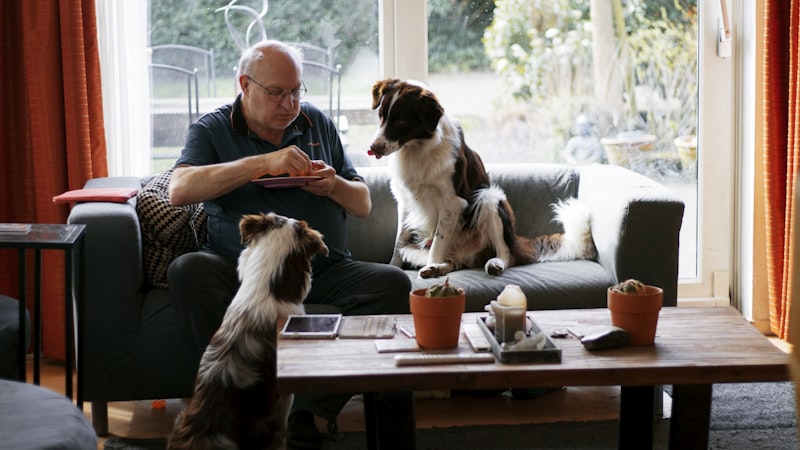
How to Train a Puppy Basic Commands: Step-by-Step
Teaching your puppy basic commands is one of the most important things you'll do as a new dog owner. Commands like sit, stay, and come aren't just tricks — they keep your dog safe and make daily life easier. Here's how to train your puppy basic commands using positive reinforcement methods that actually work.
Before You Start Training
Set yourself and your puppy up for success with these fundamentals:
- Use high-value treats your puppy loves (small, soft pieces work best)
- Keep sessions short — 5 to 10 minutes, 2–3 times per day
- Train in a quiet, distraction-free environment initially
- Be consistent — use the same word and hand signal every time
- End every session on a positive note, even if progress is slow
- Be patient — puppies have short attention spans and that's normal
The 5 Essential Commands
1. Sit
The easiest command to teach and the foundation for everything else.
- Hold a treat above your puppy's nose
- Slowly move it back over their head — their bottom will naturally lower
- The moment their bottom touches the floor, say "sit" and give the treat
- Repeat 10–15 times per session
- Once consistent, start saying "sit" before luring with the treat
2. Stay
Teaches impulse control and keeps your puppy safe in potentially dangerous situations.
- Ask your puppy to sit
- Hold your palm out in front of them and say "stay"
- Wait 2 seconds, then reward if they haven't moved
- Gradually increase the duration — 5 seconds, then 10, then 20
- Add distance slowly — take one step back, then two, then three
- If your puppy breaks the stay, simply reset without punishment
3. Come (Recall)
Arguably the most important command for safety. A reliable recall can save your dog's life.
- Start indoors on a leash with minimal distractions
- Get your puppy's attention, then back away while saying "come" enthusiastically
- Reward generously when they reach you — make coming to you the best thing ever
- Never call your puppy to you for something unpleasant (bath, nail trim)
- Practice in increasingly distracting environments as reliability builds
- Use a long training leash outdoors until recall is solid
4. Down (Lie Down)
A calming command useful in many situations, from restaurant patios to vet waiting rooms.
- Start with your puppy in a sit position
- Hold a treat in front of their nose and slowly lower it to the ground
- Move the treat away from them along the ground — their body should follow into a down
- Mark the moment they're fully down with "down" and reward
- If they stand up instead of lying down, restart from the sit
5. Leave It
Prevents your puppy from picking up dangerous items, food, or garbage on walks.
- Place a treat in your closed fist and present it to your puppy
- When they sniff, lick, or paw at your hand, wait — don't open it
- The moment they pull away or look up at you, say "leave it" and reward with a different treat
- Progress to placing the treat on the floor covered by your hand
- Then try with the treat visible on the floor (cover it if they go for it)
Common Training Mistakes to Avoid
- Repeating commands: Say it once. Repeating teaches your puppy to ignore the first cue
- Training when frustrated: Your puppy picks up on your emotions — take a break if needed
- Sessions too long: Short, frequent sessions beat long, exhausting ones
- Inconsistency: Everyone in the household must use the same commands and rules
- Punishing mistakes: Punishment creates fear, not understanding
When to Start Training
You can start training basic commands as soon as you bring your puppy home, typically at 8 weeks old. Puppies are eager learners at this age, and early training establishes good habits before bad ones form.
Get the Right Training Gear
Quality training treats, a clicker, and a comfortable collar or harness make training sessions more effective and enjoyable. Shop puppy training essentials at PawSmart and start building a lifelong bond with your new companion.
Related Articles